

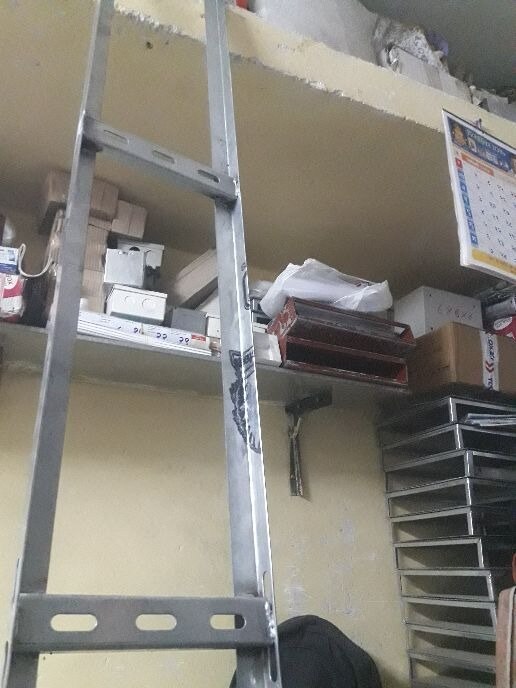
A ladder-tray order starts with cable data and route constraints, not a tray width selected from a catalogue. By the end of the process, you should be able to issue a complete purchase schedule, approve a fabrication drawing, verify the galvanizing and inspection records, and check whether the delivered consignment matches what you ordered.
Key takeaways
- Send the route drawing, cable schedule, span, load, width, and finish before requesting a quotation.
- Approve tray material, rung spacing, supports, joints, bends, and accessories on the route drawing.
- Request galvanizing details, coating inspection records, and repair instructions after hot-dip galvanizing.
- Match packing lists, dispatch documents, and delivery checks to the approved tray schedule.
What the manufacturer needs before preparing a ladder-tray quotation
A correct quotation starts with the route, not the tray width. Tell the manufacturer whether you need open ladder tray or enclosed cable trunking; they provide different ventilation, visibility, drainage, and installation characteristics. A search for GI cable trunking manufacturers supplying ladder tray for process plants in Pune does not define the product or finish.
Provide these details in the enquiry:
- State each straight-run length, total quantity, tray width, side-rail height, rung spacing, and material thickness or section size.
- Attach the route drawing and cable schedule, including cable outside diameters, weight per metre, quantity, spare capacity, support spans, allowable deflection, and elevations.
- Count every fitting: horizontal and vertical bends, tees, crosses, reducers, risers, drop-outs, couplers, covers, support brackets, expansion joints, and fasteners.
- Identify the installation environment: indoor or outdoor, process area, washdown zone, chemical exposure, temperature, corrosive atmosphere, and mounting surface.
- Specify the finish as pre-galvanized steel or post-fabrication hot-dip galvanizing. “GI” alone does not state coating thickness or corrosion performance.
- Request the galvanizing standard, coating requirement, fabrication location, galvanizer’s location, subcontracting details, inspection records, delivery point, and required dispatch date.
The phrase ladder cable tray suppliers in Pune identifies a market search, not an engineering specification. Ask for a fabrication drawing showing dimensions, fittings, loading assumptions, and support spacing before approving the quotation. A Pune sales address does not prove local manufacturing or hot-dip galvanizing capacity.
How the approved route drawing becomes a fabricated tray
An approved route drawing is not yet a cutting list. GI cable trunking manufacturers convert it into a tray schedule and shop drawing that state the tray width, side-rail height, rung pitch, material thickness, finish, support spacing, and load per metre. The purchaser approves these documents before any cutting begins.
1. The estimator maps the cable schedule onto each route section, checking cable quantity, diameter, bending radius, weight, separation, and future capacity. That determines tray width, rail height, support spacing, and the design load.
2. The drafter creates a fabrication schedule for straight lengths, bends, tees, crosses, reducers, vertical risers, covers, couplers, fasteners, and support accessories. It also records each quantity, angle, radius, hole pattern, and connection detail.
3. The manufacturer releases the approved drawing to production. Operators cut and form the rails and rungs, punch or drill mounting and splice holes, and weld or mechanically join the assembly.
4. Fabricators deburr every cut edge and remove sharp projections before checking tray length, width, height, straightness, rung spacing, and fitting geometry against the drawing.
5. Inspection verifies hole locations, weld or fastener condition, and the specified finish before packing. If hot-dip galvanizing follows fabrication, the production drawing must show drain and vent holes and identify threaded parts that need protection.
Resolve one critical distinction at this stage: an open ladder tray provides ventilation and visibility, while enclosed trunking protects and conceals cables. A quotation that silently substitutes one for the other is not a drawing approval; it is a scope error.
What changes when fabrication is followed by hot-dip galvanizing
Fabrication must be designed for the galvanizing tank, not merely completed before it. After cutting, punching, forming, welding or joining, remove oil, weld slag, paint, sharp burrs and drilling swarf. The galvanizer then degreases, pickles, fluxes and immerses the assembly in molten zinc.
Hollow rails, boxed sections and enclosed fittings need correctly sized vent and drain holes. Without them, chemicals or zinc can remain trapped, causing uncoated patches, dangerous pressure, distortion or rejected work. Galvanizing can also add zinc to threads, alter tight-fitting dimensions and leave a brighter or duller appearance than the original steel.
Use this checklist before approving the finish:
- Confirm whether holes for venting and draining are included in the fabrication drawing.
- Identify every threaded part that needs protection, masking or post-galvanizing cleaning.
- Ask where fabrication and galvanizing occur, and whether a subcontractor handles the bath.
- Require the galvanizing standard, specified coating thickness or mass, and inspection method.
- Request the galvanizing batch certificate, coating measurements and dimensional inspection record.
Pre-galvanized steel and post-fabrication galvanizing are not equivalent:
| Option | What it means | Main check |
|---|---|---|
| Pre-galvanized steel | Zinc-coated strip is cut and formed; cut edges and welds interrupt the coating | Ask how exposed edges, welds and drilled holes are protected |
| Post-fabrication hot-dip galvanizing | The completed tray is immersed, coating rails, rungs, welds and cut surfaces | Check vent holes, distortion allowance, coating records and thread fit |
The specification for a hot dip galvanized cable tray in Pune must name the process, standard and coating requirement; “GI” alone proves none of these. A local sales address also does not prove local hot-dip capacity.
How to verify load, quotation terms, standards, and inspection records
A quoted tray is acceptable only when its capacity, finish, accessories, and inspection evidence match your approved design—not when the width alone looks correct.
1. Send the supplier cable weight per metre, fill, support span, allowable deflection, rung spacing, and environmental exposure. Request the calculated load rating at that span, side-rail and rung thickness, material grade, and a load-deflection test report. A tray rated at 1.5 metres may fail at a 2.0-metre span.
2. Make the quotation list every line item: straight lengths, bends, tees, reducers, risers, couplers, covers, support brackets, splice plates, fasteners, and bonding jumpers. Confirm whether quantities include wastage, whether fittings match the stated width and side-rail height, and whether installation hardware is excluded.
3. Replace “GI” with a defined finish. Ask whether the tray uses pre-galvanized strip or post-fabrication hot-dip galvanizing, where each process occurs, and whether galvanizing is subcontracted. Require the specified standard, such as ISO 1461 or ASTM A123, plus the coating requirement and measured thickness records.
4. Ask for the governing product standard, such as IEC 61537 where specified, and identify the edition in the quotation. Request material certificates, approved fabrication drawings, dimensional reports, weld or joint inspection records, galvanizing batch records, coating readings, and a final release note.
5. Confirm electrical continuity separately from mechanical capacity. Specify bonding jumpers where coatings, flexible couplers, or expansion joints interrupt metal contact.
A Pune sales address does not prove local fabrication or galvanizing. Ask galvanized cable tray manufacturers in Pune to identify the actual works and provide traceable batch records.
How packing, dispatch, and delivery complete the order
After final release, the supplier should reconcile the approved tray schedule with the packed goods, record inspection status, and issue dispatch documents before loading. Packing must protect galvanizing from abrasion and keep fittings, couplers, fasteners, and supports identifiable rather than mixing them with straight lengths.
- Mark each bundle with order number, tray size, length, quantity, finish, and weight.
- Separate bends, tees, reducers, risers, covers, and splice plates into labelled packages.
- Photograph the loaded consignment and provide the packing list, invoice, e-way bill, test or inspection records, and galvanizing certificate where specified.
- Confirm vehicle type, delivery address, unloading equipment, contact person, and delivery date before dispatch.
- Check the delivery against the schedule immediately; report crushed sections, missing fittings, damaged coating, or quantity differences with photographs.
Compare GI cable trunking manufacturers and ladder cable tray suppliers in Pune using evidence, not a Pune sales address. Ask TIRUMALA ENTERPRISES where fabrication and galvanizing occur, including whether either process is subcontracted.
| Supplier check | Evidence to request | Risk if absent |
|---|---|---|
| Fabrication location | Factory address and process description | Unclear production control |
| Galvanizing | Named standard, coating requirement, batch record | “GI” gives no coating specification |
| Order completeness | Approved schedule and labelled packing list | Straight tray arrives without fittings |
| Delivery control | Dispatch photos, vehicle details, agreed unloading plan | Damage or delays become difficult to assign |
Frequently asked questions
What information does a manufacturer need before quoting a ladder tray?
Provide the route drawing, cable schedule, tray type, width, depth, span, cable load, material, finish, accessories, quantity, delivery location, and required standards.
How does an approved route drawing become a fabricated ladder tray?
The manufacturer converts the approved route into a cutting and fabrication schedule, forms side rails and rungs, adds joints and accessories, checks dimensions, and prepares the finished sections for inspection or galvanizing.
What changes when a ladder tray receives hot-dip galvanizing?
Fabricators must account for vent and drain holes, lifting points, part dimensions, zinc coverage, threaded connections, and post-galvanizing inspection and repair requirements.
How can you verify a ladder-tray quotation and inspection records?
Check the quoted steel grade, dimensions, load basis, span, finish, standards, exclusions, delivery terms, test or inspection records, coating details, and approved drawings.
What should you check when ladder trays are packed and delivered?
Compare the packing list with the approved schedule, inspect bundles for damage or distortion, confirm accessories and documents, and record shortages or coating damage at delivery.


