A perforated tray quote is not comparable until you know whether it describes an open cable support system or enclosed trunking, which galvanizing process was used, and what load the tray carries at its stated support span. Use the comparison points below to select dimensions, finish, accessories and cable capacity, then request like-for-like quotes from Nashik suppliers.
Key takeaways
- Choose tray form by cable type, access needs and route geometry.
- Calculate usable width, fill, cable weight and support spacing before ordering.
- Verify zinc coating, sheet thickness, hole pattern, bends and fabrication quality.
- Demand quotes listing dimensions, material grade, finish, fittings and delivery terms.
Choose the right cable-management form before comparing GI trays
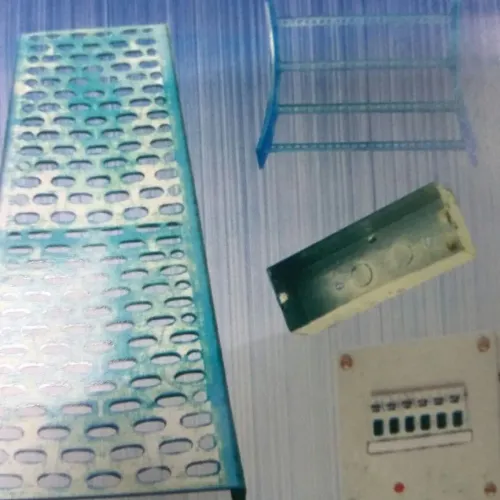
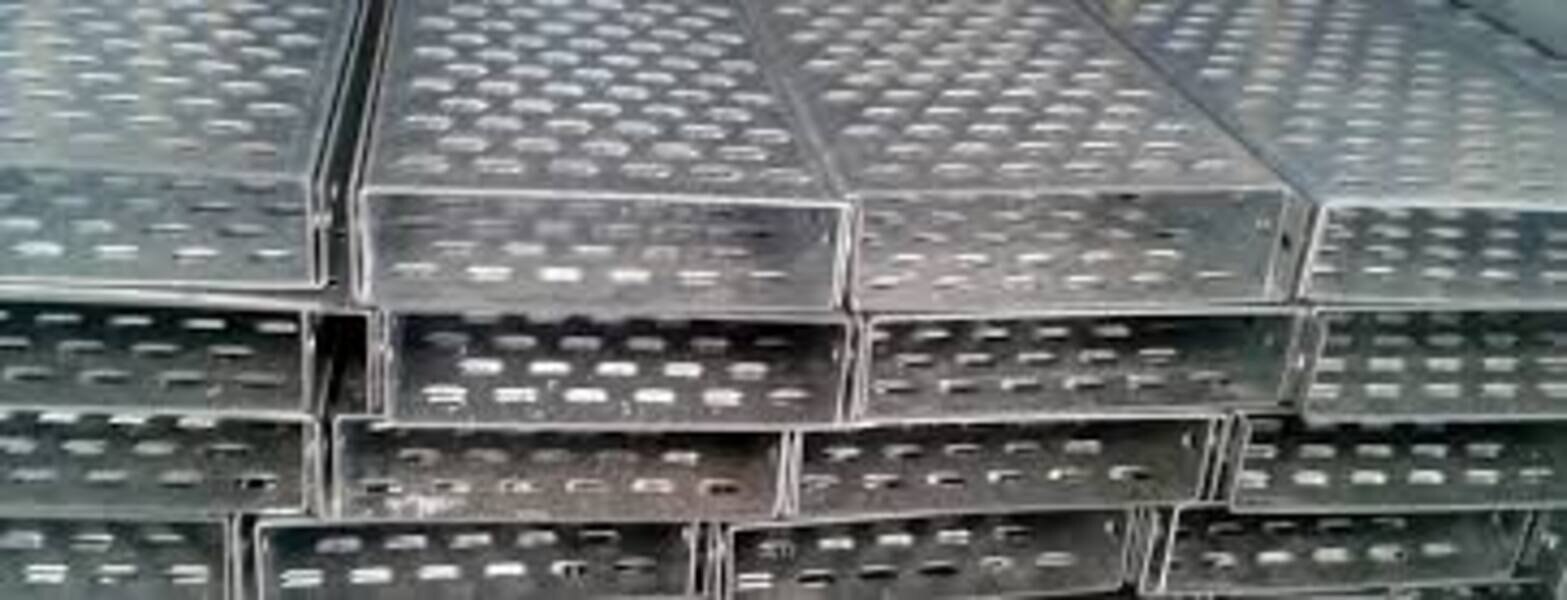
A GI perforated cable tray is a galvanized-steel, open cable support with raised side rails and punched holes in its base. The holes reduce weight, improve ventilation and provide tie points, but they also affect support, usable area and small-cable retention.
It is not an enclosure and does not provide an IP rating unless a separately specified cover and enclosure arrangement achieves one.
For a GI perforated cable tray comparison, confirm the duty before comparing gauge or price:
| Option | What it means | When it applies |
|---|---|---|
| GI perforated tray | Open galvanized-steel base with side rails and perforations | Power, control or mixed routes needing ventilation, accessible cabling and moderate mechanical protection |
| GI solid-bottom tray | Continuous metal base with open sides | Small cables, dust control or routes where cables need continuous support; it still needs a cover for enclosure |
| GI trunking | Enclosed channel with a removable cover and defined fittings | Where cables need protection from dust, impact, tampering or a specified enclosure performance |
| Ladder tray | Two side rails joined by rungs | Heavy power cables, long spans, rapid installation and maximum ventilation; small cables need ties or cleats |
| FRP tray | Fibre-reinforced polymer support, not galvanized metal | Corrosive or electrically isolated environments, after checking UV, fire, temperature and load performance |
Choose perforated tray only when open support is acceptable. Falling objects, vehicle impact, washdown, severe dust or unauthorized access calls for a cover, enclosed trunking or separate mechanical protection; adding a cover later changes ventilation, access and installation effort.
Size the tray from cable dimensions, load and route geometry
Measure the actual cable outside diameters, then size the tray’s inside width from their single-layer total. Add spare capacity for route changes, and check that the width still leaves room for minimum bending radii, cleats, joint locations and access at bends, tees, reducers and vertical transitions.
Set side-rail height from the cable stack, required separation and cleat clearance. A nominal 100 mm width or 50 mm height says little unless the drawing states inside dimensions. This is the practical test for a perforated cable tray for contractors.
Treat GI perforated tray selection as a load-and-route calculation, not a gauge comparison. Record:
- Rated working load in kilograms per metre at the stated support span, along with allowable deflection and test method.
- Sheet thickness, side-rail depth, return flanges, stiffeners and splice design; identical gauges can produce different capacities.
- Hole dimensions, pitch, open-area percentage and edge treatment; large holes can leave small control cables unsupported, while high open area can reduce stiffness.
- Support spacing, with extra supports near joints, bends and vertical changes where cable weight concentrates.
Select thickness from the declared load and span, not thickness alone. Confirm that splice holes align and that burrs are removed before ordering; sharp edges snag insulation and incompatible plates delay installation. Ask for a sample or fabrication drawing showing these details, then verify the delivered tray against it.
A tray that passes a straight-run calculation can still fail at route geometry.
Check galvanizing, fabrication quality and site-environment fit
Corrosion resistance and installation safety depend on the steel grade, zinc process, formed dimensions and site conditions—not on the label “GI” alone. Ask for a drawing or sample showing inside width, side-rail height, hole pattern, splice-hole alignment, tolerances and burr removal.
| Option | Coating and fabrication | Selection consequence |
|---|---|---|
| Pre-galvanized sheet | Zinc-coated sheet is punched and formed; cut, drilled or welded areas need a specified zinc-repair method | Inspect exposed steel, rough edges and damaged coating before installation |
| Hot-dip galvanized after fabrication | The completed tray is immersed after cutting, forming and welding, coating fabricated edges and weld zones more completely | Confirm coating designation or thickness, drainage holes and venting for hollow sections |
| Painted or uncoated steel | No zinc barrier protects exposed steel; paint damage exposes the substrate | Reject it where monsoon wetting, condensation or industrial pollutants are expected unless the specification names a suitable protection system |
Use this check before approving quotes from GI perforated cable tray suppliers in Nashik:
- Match the delivered tray to the approved sample: cables must not contact sharp perforation edges, weld spatter or burrs.
- State the rated load at the stated support span, sheet thickness, material grade and fabrication process; gauge alone cannot prove capacity.
- Specify drainage holes, compatible galvanized fasteners and separation from copper or stainless steel where dissimilar-metal contact could accelerate corrosion.
- List zinc-repair material and application method for every cut or weld made after pre-galvanizing.
- Include bends, tees, risers, splice plates, brackets, covers, bonding jumpers and cleats; site-made bends can crack the coating and weaken the route.
Compare perforated tray and ladder tray by cable duty and installed effort
Perforated tray is the better choice for control, instrumentation and dense mixed routes when you need continuous bottom support, frequent strapping and easy access from above. It also suits power cables when the selected span and working load are adequate.
Ladder tray performs better for large, heavy power cables when ventilation, long spans and fast cable pulling matter more than continuous support.
| Option | Best cable duty | Installed effort | Main limitation |
|---|---|---|---|
| GI perforated tray | Control, instrumentation, small power and dense routes | Easier cable positioning, cleating and branch take-offs | More supports may be needed; holes can weaken the tray or fail to support small cables |
| GI ladder tray | Large power cables and long straight runs | Faster pulling, better ventilation and fewer obstructions | Cables need cleats or ties, and small cables can sag or require added support |
In a GI perforated cable tray comparison, record working load at the stated support span, allowable deflection, side-rail height, hole size and pitch, not sheet thickness alone. Large holes can lose small control cables, while high open area can reduce stiffness.
For a perforated cable tray for contractors, include bends, tees, reducers, risers, drop-outs, splice plates, brackets and cable cleats in the quantity schedule. Missing fittings create site-made bends and increase installation time.
Do not treat open tray as mechanical protection. Add a specified cover or separate protection where falling objects, vehicle impact, washdown, severe dust or unauthorized access threatens the cables. Recheck cable ampacity after adding covers, tight grouping or multiple tiers.
Turn Nashik supplier quotes into a like-for-like purchase schedule
A search for gi cable trunking manufacturers perforated tray for options in nashik should produce comparable schedules, not isolated metre rates. State whether you need an open perforated support system or enclosed trunking with mechanical protection; they are not interchangeable, and perforated tray has no inherent IP rating.
Ask every gi perforated cable tray suppliers in nashik to state:
- Material grade, sheet thickness, manufacturing process, tray width, side-rail height, usable inside dimensions, hole pattern, splice-hole alignment, dimensional tolerances and deburred edges.
- Galvanizing method and coating condition, including treatment of cut edges and site repairs.
- Uniformly distributed load at the purchased support span, plus the load-versus-span table or test report; identify concentrated loads and vertical risers separately.
- Straight length, bends, tees, crosses, reducers, risers, drop-outs, covers, splice plates, support brackets, threaded rod or channel, fasteners, bonding jumpers and cable cleats as separate quantities and prices.
- Sample or drawing showing perforations, burr removal and joint fit, followed by inspection documents, batch identification and delivery condition.
- Installation assumptions: support spacing, splice method, cutting limits, required tools, crew effort and whether factory-made fittings are included.
Use one drawing and one bill of quantities for every gi perforated tray selection. TIRUMALA ENTERPRISES can be asked to quote against that same schedule, allowing its tray price to be compared with Nashik suppliers on installed effort rather than gauge alone.
Related product
 | GI Perforated Cable Tray View product → |
Frequently asked questions
How do you choose between a GI perforated tray and other cable-management forms?
Choose based on cable size, ventilation, retention, access, route geometry and the need for covers or fittings.
How should you size a GI perforated cable tray?
Use cable dimensions, allowable fill, total cable weight, support spacing, bend radius and the route’s vertical and horizontal changes.
What should you check when comparing GI perforated cable tray suppliers in Nashik?
Check sheet thickness, galvanizing finish, hole pattern, rail and bend fabrication, compatible fittings, load information and site-environment suitability.
When is a ladder tray better than a perforated tray?
Choose ladder tray for heavier power cables, longer spans, stronger ventilation and easier cable access when small-cable retention is not the priority.
What should a like-for-like tray quotation include?
Request tray width and height, length, material and coating details, thickness, fittings, supports, accessories, quantities, delivery terms and taxes.