Choosing between galvanized steel trunking and FRP tray depends on corrosion, cable heat, mechanical loading, fire performance, electrical continuity, and access—not on the material name alone. By the end, you can match each containment form to the route, calculate its size, specify the evidence a supplier must provide, and compare installed cost without treating unlike systems as interchangeable.
Key takeaways
- Choose GI trunking for dry indoor routes needing metallic continuity.
- Choose FRP tray for wet, corrosive, or electrically nonconductive environments.
- Specify cable type, fill capacity, dimensions, supports, and finish before pricing.
- Request drawings, material details, load data, and compliance documents from suppliers.
GI Trunking and FRP Tray: Compare the Service Conditions First
For a dry indoor route with impact risk and a need for metallic continuity, GI trunking is usually the better choice; for corrosive, wet, or electrically nonconductive environments, FRP tray is the better starting point.
| Material | Strengths | Service limits and checks |
|---|---|---|
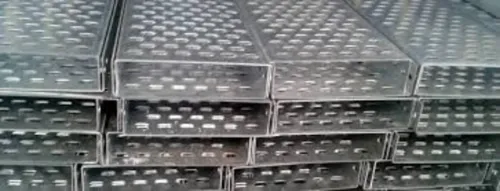
| GI trunking | Enclosed protection from accidental contact and falling debris; strong mechanical support; steel provides a bonding path; steel itself is noncombustible | Galvanizing does not define ingress protection: verify the IP classification under IEC 61084. Check corrosion exposure, heat dissipation, inspection access, fire classification, and coating damage. |
| FRP tray | Low electrical conductivity, low maintenance in many corrosive atmospheres, and resistance to moisture, salt, and selected chemical exposure; useful for outdoor and process routes | Verify resin chemistry, UV rating, fire performance, operating-temperature range, load span, and impact rating. FRP does not provide metallic continuity unless conductive components are incorporated. |
FRP cable tray applications suit coastal installations, wastewater plants, chemical-processing areas, offshore support routes, and substations exposed to moisture or corrosive vapours. Confirm resistance to the actual solvent, oxidizer, and temperature; FRP is not immune to every chemical.
Compare GI cable trunking manufacturers against FRP suppliers using the correct system standard: IEC 61084 covers trunking and ducting, while IEC 61537 covers tray and ladder systems. Do not copy supports, joints, or expansion gaps between materials. Check cable fill separately from ampacity, including grouping, spacing, ambient temperature, ventilation, and solar heating.
The installed-cost decision must include supports, joints, bonding, covers, coatings, inspection time, and expected maintenance—not just the tray or trunking price.
Match the Containment Form to the Cable and Location
Use an enclosed route where protection and segregation matter; use an open route where ventilation and inspection matter. Match the form to the cable, environment, and required system standard: IEC 61084 covers trunking and ducting systems, while IEC 61537 covers cable tray and cable ladder systems.
| Option | What it means | When it applies |
|---|---|---|
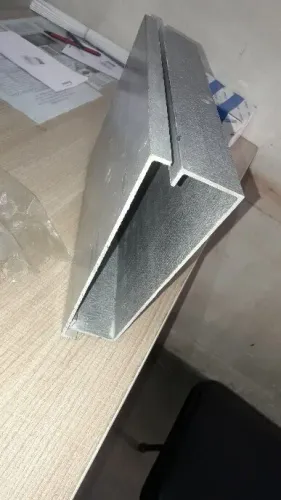
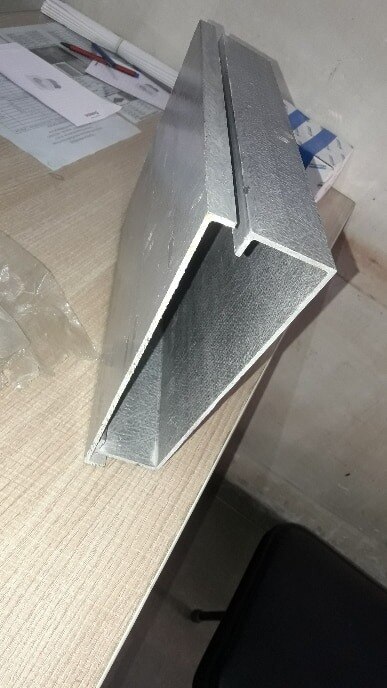
| GI trunking | Galvanized steel enclosure with a cover | Use for control, instrumentation, or power cables needing protection from accidental contact, falling debris, or defined ingress protection. The cover improves protection but restricts heat dissipation and inspection. |
| Perforated tray | Open steel tray with ventilation holes | Use for mixed power and control routes where ventilation, visual inspection, and easier cable access outweigh full enclosure. |
| Solid-bottom trunking | Continuous base supporting cables without perforations | Use for small control, data, or instrumentation cables that need a cleaner route and protection from dust or falling particles. Provide heat checks for grouped power cables. |
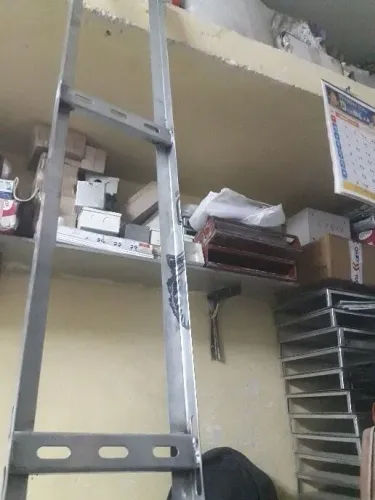
| Ladder tray | Two side rails joined by rungs | Use for heavy, large-diameter power cables on long runs. The rungs improve ventilation and reduce weight, but small cables need tie-downs or a retaining system. |
| FRP tray | Nonconductive, corrosion-resistant open tray | Choose FRP cable tray for applications exposed to chemicals, wastewater, coastal moisture, or outdoor corrosion. Common FRP cable tray uses include power, control, instrumentation, and communication routes. |
Open tray does not remove ampacity calculations: grouping, spacing, ambient temperature, and solar heating still apply. For outdoor FRP, verify UV-rated resin, veil, pigment, or coating; also specify bonding because FRP provides no metallic continuity.
Specify the Tray, Trunking, and Capacity Before Requesting Prices
A safe price request starts with the cable schedule, route conditions, and support geometry—not just “300 mm tray.” State the containment form, material, dimensions, cover requirement, support span, and total cable load per metre. A mechanically adequate tray can still overheat grouped cables or fail when spans exceed its tested rating.
1. Record the cable count, outside diameter, weight per metre, minimum bending radius, voltage class, and required separation between power, control, instrumentation, and communication cables. State whether cables will be single-layer, stacked, or spaced.
2. Give the proposed width, side-rail height, trunking depth, route length, joint locations, and maximum support span. Request the allowable working load and deflection at that span, not only a nominal load rating.
3. Check cable fill separately from ampacity. Confirm grouping, ambient temperature, solar exposure, and enclosure heat dissipation under the applicable wiring rules; enclosed GI trunking can produce higher cable temperatures than an open tray.
4. Name the system standard: IEC 61084 for cable trunking and ducting, or IEC 61537 for cable tray and ladder systems. Request the product classification, corrosion protection, temperature range, UV rating, fire performance, and IP classification where an enclosure is specified.
5. For FRP cable tray applications, identify the resin system and chemical, moisture, UV, and temperature exposure. Specify bonding requirements because FRP is nonconductive; GI sections, covers, glands, armour, and supports need a deliberate earthing design.
GI cable trunking manufacturers should also confirm whether covers and joints preserve electrical continuity and the stated IP classification. Compare that evidence with the FRP supplier’s load tables and exposure limits, not with material names alone.
Install the Route With the Correct Supports, Bonds, and Standards
A correctly selected system fails when the route is under-supported, electrically discontinuous, or installed outside its environmental limits. Check the installation against the product-system standard: IEC 61084 covers cable trunking and ducting, while IEC 61537 covers cable tray and cable ladder systems.
- Confirm support spacing, cantilever loading, fixing type, and tray deflection against the supplier’s installation data. Do not copy steel spacing onto FRP; the materials behave differently.
- Bond every metallic section across joints, covers, supports, glands, and armour where the earthing design requires continuity. FRP is nonconductive, so it cannot be treated as the bonding path.
- Verify the trunking’s declared IP classification under IEC 61084. “Galvanized” describes the finish, not protection against dust or water.
- Check that outdoor FRP matches the exposure: the resin, veil, pigment, or coating must be rated for prolonged ultraviolet light. Indoor chemical resistance does not prove UV suitability.
- Provide the specified expansion arrangement on long straight runs, including joint type, gap, and support position.
- Recheck the cable temperature calculation after installation. Enclosure, ventilation, ambient temperature, grouping, and cover position affect heat dissipation.
- Keep power, control, instrumentation, and communication cables separated where electromagnetic interference or safety rules demand it.
FRP cable tray uses are strongest where atmospheric corrosion and electrical nonconductivity matter, but verify resistance to the actual chemicals and temperature. Ask GI cable trunking manufacturers to identify the tested system classification, load data, bonding method, and installation limits rather than treating every containment product as interchangeable.
Turn the Comparison Into a Supplier-Ready Purchase Brief
Request a signed technical schedule before placing the order. It must identify the product-system standard, design assumptions, and every exception; “GI” or “FRP” alone is not a specification.
1. Name the system: IEC 61084 for trunking or IEC 61537 for tray and ladder, with the product classification, IP rating, dimensions, thickness, finish, resin system, and fire-performance result.
2. State the route conditions: indoor or outdoor location, UV exposure, ambient temperature, chemical vapours, moisture, solar heating, and the intended use of the FRP cable tray for applications in corrosive areas.
3. Show the design load, maximum support span, allowable working load, deflection limit, joint detail, and expansion arrangement. Do not copy GI support spacing onto FRP.
4. Attach the cable schedule with fill, grouping, spacing, cable weights, ampacity assumptions, segregation requirements, and the enclosure condition used in temperature calculations.
5. Define bonding and earthing for metallic trunking, covers, glands, supports, armour, and nearby exposed metal. FRP itself is not a continuity path.
6. Request drawings, installation instructions, inspection criteria, test certificates, warranty exclusions, replacement parts, and delivery tolerances.
Compare these documents from several gi cable trunking manufacturers and suppliers, including TIRUMALA ENTERPRISES, rather than comparing catalogue names. One missing load table or environmental limit is a reason to pause the purchase.
Related products
 | All type FOR cable tray treading supplie View product → |
 | GI Perforated Cable Tray View product → |
Frequently asked questions
When should you choose GI trunking instead of FRP cable tray?
Choose GI trunking for dry indoor routes where impact protection, enclosed containment, and metallic continuity matter.
When are FRP cable tray applications more suitable?
FRP cable tray applications suit wet, corrosive, outdoor, and electrically nonconductive environments.
What should you specify before requesting cable containment prices?
Provide the route length, cable sizes and weights, containment form, dimensions, fill capacity, finish, supports, and accessories.
Which installation details must you confirm with the supplier?
Confirm support spacing, load capacity, joint hardware, bonding requirements, earthing continuity, and the standards shown in the supplier documents.
Related products
 | ₹140 View product → |
 | Reliance type tray manufactur we are View product → |