Rain, humidity, mud and trapped water expose weak galvanizing, poorly protected cut edges and undersized supports long before a dry-season inspection would reveal them. By the end, you will know how to identify the correct GI ladder tray, specify its coating and construction, compare it with other cable-management systems, and evaluate a Nashik supplier before placing a monsoon-project order.
Key takeaways
- Identify ladder trays by two side rails and open, regularly spaced rungs.
- Specify galvanizing, drainage, fasteners and supports for monsoon exposure.
- Size tray width from cable fill, spacing, bend radius and future capacity.
- Reject ladder trays where cables need continuous support or weather sealing.
Which catalogue product is actually a GI ladder type cable tray?
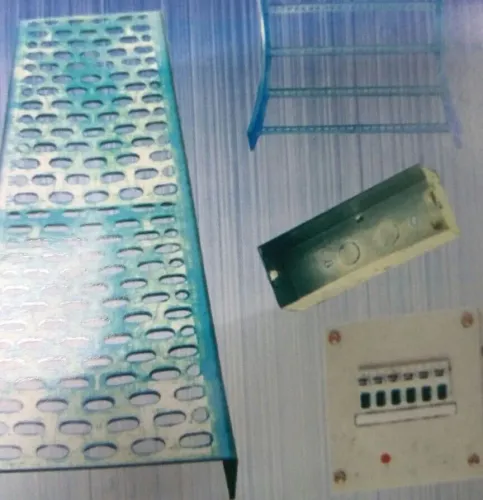
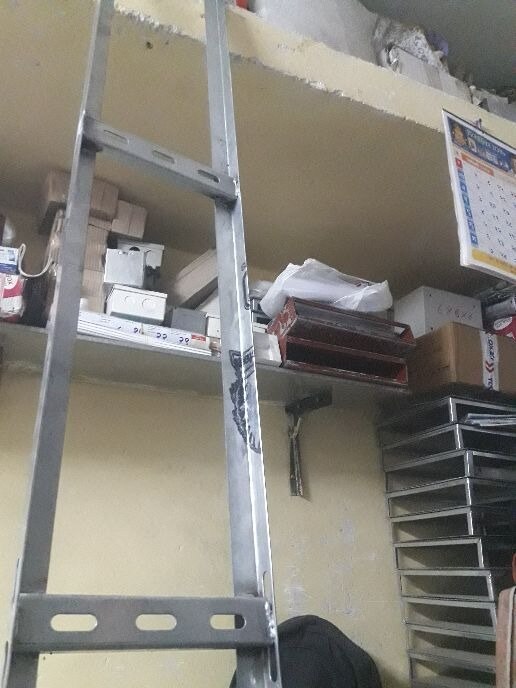
The catalogue product is a GI ladder type cable tray if its drawing shows two continuous side rails joined by regularly spaced rungs, leaving most of the cable-supporting surface open. Do not identify it from “GI” alone; that describes the steel finish, not the tray geometry.
| Catalogue name | How to identify it | What to request |
|---|---|---|
| GI ladder type cable tray | Two side rails, transverse rungs, open underside and clear drainage paths | Section drawing, rung spacing, steel thickness and galvanizing process |
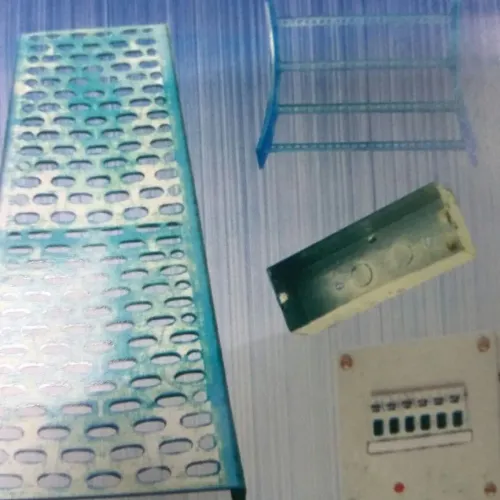
| GI perforated cable tray | Solid base with repeated punched slots and raised side flanges | Perforation pattern, base width, side height and load data |
| Reliance type ladder tray | A named or local ladder-style design; construction details vary between suppliers | Manufacturer’s dimensional drawing, rung-to-rail joint detail and proof that it is not merely a trade name |
For GI ladder type cable tray manufacturers in Nashik monsoon projects, ask the quotation to state pre-galvanized sheet or hot-dip galvanized after fabrication. Pre-galvanized steel can expose cut edges and welds; post-fabrication hot-dip galvanizing generally covers those features more completely.
Request the coating requirement and inspection basis, such as IS 4759 and IS 2629, rather than accepting “GI tray.”
Also request the applicable IEC 61537 edition, product configuration and test evidence. Reject a quotation that gives only “Reliance type” or “as per IEC” without a drawing, because you cannot verify drainage, accessory fit, joint bonding or cable segregation before ordering.
How should GI ladder trays be specified for Nashik monsoon exposure?
Specify hot-dip galvanized steel after fabrication for a ladder tray for rainy projects exposed to Nashik’s rain, humidity, mud and industrial pollutants. Request the galvanizing standard and coating requirement in the quotation; “GI” alone is not a specification. Refer to IS 4759 for zinc coatings and IS 2629 for hot-dip galvanizing practice.
| Finish | Exposure suitability | Main monsoon risk |
|---|---|---|
| Pre-galvanized steel | Indoor or sheltered outdoor runs | Cut edges, drilled holes and welds can expose bare steel unless repaired |
| Hot-dip galvanized after fabrication | Fully exposed rooftops, yards and utility routes | Higher protection at fabricated edges, welds and cut features; inspect for damaged coating |
Design drainage into the tray. Ladder rails and rungs must not form a continuous shelf that holds water beneath cables; provide slope or clear drainage at low points. Use covers only where they stop falling water, debris or UV damage.
State whether covers apply to horizontal runs, vertical runs, outdoor sections or vulnerable points, because sealed covers retain humid air and hinder inspection.
Accept each delivery against a recorded checklist:
- Verify width, height, straightness, rung spacing, weld continuity and absence of burrs or sharp zinc drips.
- Check continuous galvanizing, bare spots, flaking, white rust, red corrosion and repaired cut edges.
- Confirm bends, tees, covers, clamps and joints fit without forced alignment.
- Photograph defects and retain material or coating certificates; “GI tray supplied” on a delivery note proves little.
- Keep bundles off ground, separated for airflow and protected from standing water. Close-wrapped wet bundles develop white rust before installation.
How do width, load and cable arrangement determine the right tray?
Calculate internal tray width from the cable schedule, not from the tray’s outside dimension. Add each cable’s outside diameter, required separation between voltage or EMC groups, and dressing clearance; then select the next available width. A wider tray does not remove segregation or derating requirements.
| Application | Arrangement | Design check |
|---|---|---|
| Power | Keep power cables grouped and separated from sensitive circuits | Use cable OD, bend radius and heat derating |
| Control | Separate from power where the project standard requires it | Prevent overcrowding at gland and termination points |
| Instrumentation | Use dedicated segregation from power and noisy control circuits | Protect EMC performance and service access |
| Solar | Allow for larger DC cable bends and roof-route expansion | Check UV exposure, rooftop supports and drainage |
| Pump-room | Keep routes clear of valves, motors and wet zones | Avoid splash, standing water and maintenance clashes |
| Factory | Divide circuits by voltage and future extensions | Check impact loads and congested crossings |
| Rooftop | Follow the roof layout without blocking drains | Seal penetrations and slope runs toward drainage |
| Utility | Coordinate incoming, outgoing and communication services | Confirm clearance, fire separation and access |
Calculate load in kilograms per metre by adding the scheduled cable weights for the run, then include specified spare capacity, separators and accessories. Compare that total with the manufacturer’s declared uniformly distributed load at the actual support span.
Do not assume a wider tray carries more: rung spacing, side-rail depth, steel thickness and span change capacity and deflection. If the site span differs, request a revised load table. Fix supports to sound concrete or steel, and check point loads at joints and bends.
When is a GI ladder tray the wrong choice?
A GI ladder tray is the wrong choice when your cables need continuous support, sealed protection, electrical isolation, or stronger corrosion resistance than zinc-coated steel provides. A buyer comparing GI ladder type cable tray manufacturers in Nashik for monsoon projects should compare the failure risk, not only the tray price.
| Option | Choose it instead when | Main trade-off |
|---|---|---|
| GI perforated tray | Small control, instrumentation, or mixed cables need continuous bottom support and protection from falling debris. | It retains more dirt and water, so provide drainage and cleaning access. |
| FRP tray | Chemical fumes, wastewater, salt-laden air, or electrical isolation demand non-metallic construction. | Confirm UV resistance, fire performance, support span, and load rating. |
| Aluminium raceway | A lightweight rooftop or façade route needs corrosion resistance and an enclosed profile. | Check deflection, impact strength, heat expansion, and isolation from dissimilar metals. |
| Conduit | Only a few cables need sealed protection through walls, wet areas, or exposed equipment connections. | Cable pulling becomes harder, heat dissipation decreases, and future additions require spare capacity. |
| Ladder with another finish | Severe industrial or coastal exposure justifies stainless steel or a specified protective coating. | The finish costs more and still needs compatible fasteners and inspection. |
If you retain GI, write the coating requirement and IS 4759 reference in the quotation; “GI” alone proves little. Specify repair of cut or drilled areas, because exposed steel at monsoon support holes can rust first.
How should you evaluate a local Nashik supplier before monsoon installation?
Do not release the full order until the Nashik supplier proves that its first batch and replacement lots will fit the same supports, joints and fittings. For gi ladder tray local supply, request these records and checks in writing:
1. Approve a physical sample or shop drawing showing side-rail profile, rung pitch, tray width, splice geometry, bend radius, tees, crosses, reducers, covers and support accessories. Confirm that bolt holes, clamps and joint plates match your existing system.
2. Put the finish in the quotation: pre-galvanized steel or hot-dip galvanizing after fabrication, with the specified coating requirement and reference to IS 4759 and IS 2629. Ask for material and galvanizing certificates; “GI tray” alone proves nothing. Check welds, cut edges and fabricated corners for continuous zinc coverage.
3. Obtain a delivery schedule split by tray, fittings and supports, with bundle identification and replacement-lot control. Reject wet, tightly wrapped bundles; store them off the ground with air circulation because trapped moisture causes white rust.
4. Confirm installation compatibility with your cable sizes, support span, earthing or bonding method, bend clearances and site access. Require the supplier to identify how field cuts and drilled holes will receive a compatible zinc-rich repair coating.
5. At site acceptance, record dimensions, straightness, weld quality, burrs, sharp edges, coating damage, accessory fit, support spacing and joint bonding. Take dated photographs against the delivery note.
TIRUMALA ENTERPRISES is worth evaluating by the same evidence, not by catalogue breadth: approve its sample and drawings before comparing price.
Frequently asked questions
Which catalogue product is actually a GI ladder type cable tray?
Choose the product whose drawing shows two continuous side rails joined by regularly spaced rungs. GI identifies the steel finish, not the tray shape.
How should GI ladder trays be specified for Nashik monsoon exposure?
Specify the galvanizing system, coating or finish, corrosion-resistant fasteners, drainage, support spacing and installation details for standing water and rain exposure.
How do width, load and cable arrangement determine the right tray?
Calculate cable quantity, outside diameters, bend radii, separation and total weight, then select tray width, rung spacing, side-rail strength and support spacing.
When is a GI ladder tray the wrong choice?
Use another tray type when cables need continuous bottom support, small cables could fall through the rungs, electromagnetic shielding is required or the route needs an enclosed weather barrier.
How should you evaluate a local Nashik supplier before monsoon installation?
Check the fabrication drawing, steel and galvanizing details, load data, delivery capacity, fastener compatibility, replacement support and inspection documents before placing the order.